
Certified in Governance and Structural Literacy (CGSL)
Governance and Structural Literacy: The Security Foundation Built Inside-Out
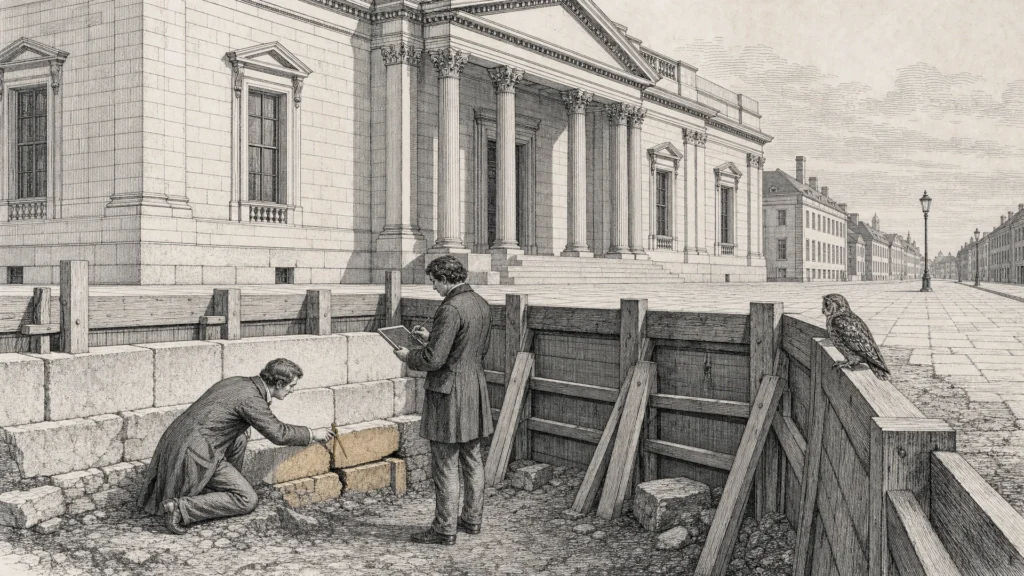
Most security certifications start at the perimeter and work in. CGSL starts where breaches actually start — at identity, at ownership, at the structural conditions that let the same failure recur across different teams, different years, different companies. Built from three decades of hands-on practitioner experience, not a framework committee’s consensus document.
Inside the program:
- Lifetime Training Access
- 1-Year Exam License Validity
- Official Online Training
- Official Exam-Prep Quizzes
- Official Course Study Guide
How to Keep Designation Active?
- No CPE Maintenance Needed
- Attend Free Refresher Training
- Contribute 5 Articles Per Year
- Keep Annual Membership Active
Most Certifications Teach You to Pass an Exam. This One Teaches You to See What's Actually Wrong.
Organizations with real budgets, real tooling, and real security teams keep getting breached by the same structural failures — not from carelessness, but because nobody had language for what was actually happening. STRIDE, the OWASP Top 10, and NIST’s frameworks are all, by design, backward-looking: they catch what’s already been named. CGSL teaches the vocabulary for what hasn’t been named yet.
- You'll learn to tell a one-off bug apart from a structural condition that will keep producing failures no matter who's on the team.
- You'll run a real diagnostic instrument — the ten structural failure patterns — against an actual organization.
- You'll build a trust model from the inside out, starting at identity instead of the network perimeter, because that's where most modern breaches actually begin.
- You'll close every diagnosis with a named owner, a verifiable outcome, and a real date — never just an observation left to go stale.
Built by security practitioners drawing on decades of security engineering, implementation, and consulting practice — not assembled by a certification board working from secondhand case studies.
What Sets This Program Apart
Inside-Out, Not Outside-In
Every other major certification starts at the network edge. CGSL starts at identity — because that’s where the Uber, CircleCI, and Optus breaches examined in this course actually began.
Real Incidents, Not Hypotheticals
Twenty-six real, dated, sourced breaches across seven-plus industries and countries — Canvas LMS, MGM Resorts, the CRA/H&R Block Canada case, and more. Where reporting is disputed, this course tells you exactly what’s confirmed and what’s only claimed.
A Working Instrument, Not Just Theory
The ten structural failure patterns aren’t a concept to memorize. They’re a scoreable diagnostic you’ll run against a real organization before the course ends, and can use again privately, any time.
Built by a Practitioner
Three decades of hands-on security engineering, not a framework assembled by committee. Gloria Institute’s governing board is expanding as the certification grows — full provenance is always public.
Is This Program Right for You?
CGSL is built for practitioners who already know the frameworks and are still watching preventable breaches happen anyway. It assumes no prior certification, but it doesn’t hold back for beginners either — the material is calibrated for someone who’s going to apply it at work the same week they learn it.
You’re the one who keeps seeing the same class of failure recur across projects, and wants a vocabulary that explains why, not just a checklist that catches it after the fact.
You’re the one who need a way to talk to a board about structural risk in terms that hold up — a scored diagnostic, not a gut-feel assessment.
You’re moving into a security-adjacent role, and want a foundation grounded in real incidents rather than abstract frameworks.
You have practical experience, and want a foundation that respects that experience rather than starting you at zero.
CGSL is where that path begins — you can also start with a Level 2 or 3 course directly and add CGSL as you go.
PROGRAM OUTCOME
What You'll Learn
Six lessons, each building on the last, moving from a single diagnostic distinction to a complete, actionable governance model.
Diagnose structural risk
Distinguish a proximate cause from a structural one, and recognize the difference in real organizational patterns, not just textbook examples.
Run the ten-pattern diagnostic
Score a real organization against ten named, falsifiable failure patterns — from the ownerless system to the AI-scale exposure gap.
Map trust from the inside out
Build a four-layer technical model plus six governance layers, anchored to seven real incidents that each map cleanly to a specific failure point.
Turn diagnosis into action
Apply the Monday Morning framework — a named owner, a verifiable completion state, a target date — so nothing you find stays a stale observation.
Who Is This For
Built for practitioners who are done with certifications that don't survive contact with a real organization
CGSL rewards people who already have something real to point it at — a system, a team, an organization — even a hypothetical one. If you want a credential you can apply the same week you earn it, this is built for you.
This course is perfect for
- Security architects and engineers who want language for patterns they've already noticed
- CISOs and security leaders who need a board-ready diagnostic instrument
- Engineers moving into security roles who want grounding in real incidents, not abstractions
- Anyone starting the Gloria Institute's security certification path, since this course is mandatory first
This course may not be for you if
- You want a credential that requires no engagement with real organizational scenarios
- You're looking for a narrow, single-tool certification rather than a governance foundation
- You need a certification with no prerequisite reading or applied exercises at all
- You're specifically seeking deep technical pipeline content — that's CPSE, the required second course
- 26 real, dated, independently sourced breaches.
- 10 falsifiable structural failure patterns.
- One diagnostic instrument you’ll actually use again.
- Built from three decades of practitioner experience — not a framework assembled by committee.
- 6 lessons.
- One diagnostic instrument.
- A foundation the rest of your certification path depends on.
What You Will Study
6 core lessons, each with interactive scenarios and a graded knowledge check, followed by certification exam eligibility once you’ve completed the course.
Certification Exam
Once you’ve completed all 6 lessons, you’re eligible to sit the certification exam. Use the course companion guide, the ready reckoner handout and the comprehensive study guide, which is available for you to prepare.
Why your software estate isn't a bad architecture — it's sediment. The distinction between proximate and structural causes, and why STRIDE, the OWASP Top 10, and NIST's frameworks are all structurally backward-looking. Anchored to the 2026 Canvas LMS breach.
How a system can pass every review, ship clean, and still become dangerous years later without a single new line of code. The repository graveyard, the AI contamination loop, and the Equifax case examined in full.
The certification's flagship diagnostic instrument. Score a real composite organization against ten named, falsifiable patterns — and take the blank instrument home to use on your own.
Identity, authentication, authorization, and input validation — built outward from the center, not inward from the perimeter. Anchored to Uber, Optus, MOVEit, and CircleCI.
Six governance layers, from observability to data classification. Anchored to MGM Resorts, the CRA/H&R Block Canada case, and a revisit of Canvas LMS and CircleCI through a governance lens.
The Monday Morning framework, full-lifecycle ownership, and the AI-acceleration forcing function — why the vulnerabilities this course teaches you to see are now findable by machines faster than most organizations can respond.
Once you've completed all six lessons, you're eligible to sit the certification exam. Use the course companion guide and the comprehensive study guide, which is available for you to prepare.
OBJECTIVES
The Path To Becoming A Practitioner
Every lesson in CGSL builds toward three concrete, applicable outcomes — not abstract awareness, but skills you can use on a real system the same week you finish the course. By the end of this course, you won’t just know the vocabulary. You’ll be able to use it.
See the difference between a bug and a condition
Name the specific structural conditions that let a well-resourced security program still miss the vulnerability that actually gets exploited.
Run a real diagnostic
Score an organization — a real one or your own — against ten falsifiable structural failure patterns, with a completion state you can defend to a skeptical colleague.
Turn findings into owned action
Convert every diagnosis into a Monday Morning action: a named owner, a verifiable completion state, and a target date, every time.
OVERVIEW
About This Course
CGSL is the first of two mandatory foundation certifications in the Gloria Institute security certification path. It was built drawing on more than three decades of hands-on security engineering strategy, implementation and practice development, because of a pattern we keep seeing across organizations of every size: real budgets, real tooling, real security teams — and the same structural failures recurring anyway, not from carelessness, but because nobody had a vocabulary for what was actually happening.
Where most certification content works outside-in — starting from a framework and asking you to memorize its categories — CGSL works inside-out. It starts at identity, not the network perimeter. It starts at ownership, not compliance. And it anchors every concept to a real, dated, independently sourced incident, so you’re learning from what actually happened, not a hypothetical case study built to make a point too neatly.
This course’s training is required before any Gloria Institute Security Level 2 field specialization or Level 3 role specialization credential can issue, and it pairs directly with CPSE, the second foundation course, which takes the diagnostic skills built here and turns them into six-stage engineering practice. You don’t have to complete it before starting a Level 2 or 3 course — just before that course’s credential is yours.
Everything you need to learn the pipeline, apply it, and prepare for certification.
What's Included
Enrollment includes the full interactive course and its companion reference guide. Certification itself — the exam voucher and optional study guide — is available separately once you’re ready.
- Six interactive online lessons covering all six pipeline stages
- Branching scenarios and graded knowledge checks in every lesson
- A free companion guide covering all six lessons, included with enrollment
- Five real, dated, sourced incident case studies anchoring the pipeline
- Official course study guide for certification exam prepration
- Certification exam eligibility
- Access to the Gloria Institute learner community and future certification path updates
Eligibility & Requirements
CGSL has no formal prerequisite certification — it’s the entry point to the Gloria Institute’s security path. That said, this course is written for working practitioners, and it rewards having a real system, team, or organization to apply the material to.
This is Gloria Institute's entry-level security foundation course. You don't need CPSE or any other credential to begin here.
Not required, but the course moves at a pace calibrated for someone already working in or around security, engineering, or IT governance.
Approximately 5–6 hours of core lesson content, plus additional time for the optional private diagnostic exercise and exam preparation.
CGSL is required before CPSE. Together, CGSL and CPSE training is required for every Gloria Institute Level 2 and Level 3 credential to issue — you can enroll in a Level 2 or 3 course anytime, but its credential won't issue until Foundations training is complete and the Foundations exam is passed or waived. Practitioners with 5+ years of qualifying hands-on experience can apply for a Foundations Exam Waiver to skip the exam specifically. [See Waiver Eligibility →]
The Credential That Opens Doors
When you complete a Gloria Institute program, you earn more than just a certificate—you gain recognition for practical, industry-relevant expertise that employers value.
Our certificates are thoughtfully designed to reflect the credibility and quality of our programs. Each credential specifies the specific competencies you’ve mastered, providing clear evidence of your professional development to current and prospective employers. Each Gloria Institute certificate includes:
- Program-specific competencies achieved
- Digital badge for certifications
- Completion date
- Unique verification number
- Support for certificate verification
Sample Certificate
Here’s an example of the certificate you’ll get when you finish a program at the Gloria Institute successfully:

Enrollment, Examination, and Policy FAQs
No. CGSL is Gloria Institute's entry-level security foundation course and has no certification prerequisite.
Yes. Course enrollment includes the 6 interactive lessons and the free companion guide. A certification exam voucher and a comprehensive student study guide are also part of this course.
Course access details and time limits are set at enrollment — check your specific enrollment terms for exact access duration.
Yes — CGSL should be completed before CPSE. CGSL and CPSE training together is required for every Level 2 field specialization and Level 3 role specialization credential to issue, but you don't need to complete either before starting a Level 2 or 3 course. Enrollment is open; the credential is what waits on Foundations.
The companion guide, included with enrollment, covers the same material as the course for quick review. The student course study guide is a thorough product built specifically for exam preparation — compressed review, practice questions, and a full mock exam.
The exam voucher comes with a free retake. A mandatory waiting period applies between attempts. Specific retake policy and pricing for additional retakes are detailed at the point of exam voucher purchase.
CGSL was built by Gloria Institute practitioners with decades of combined hands-on security engineering, implementation, and consulting experience — not a certification board working from secondhand case studies. Every concept, practice, and framework in this course was developed and refined through real security work: what worked, what didn't, and what changed after watching the same structural failures recur across other practitioners and organizations.
If you've got 5+ years of hands-on secure coding, DevSecOps, or penetration testing experience, you can apply to waive the CGSL certification exam specifically — not the training. You'll still complete the CGSL lessons in full, since that's the shared vocabulary every Gloria Institute specialization assumes. The waiver just means you can move on to your Level 2 or 3 course without also sitting for CGSL's exam right now. Your CGSL exam voucher stays valid if you decide later you want the CGSL credential itself. [Apply for a Waiver →]
Start where the breaches actually start.
Enroll in CPSE and begin the foundation every Gloria Institute Security certification builds on — or apply for a Foundations Exam Waiver if your hands-on experience already covers this ground.